
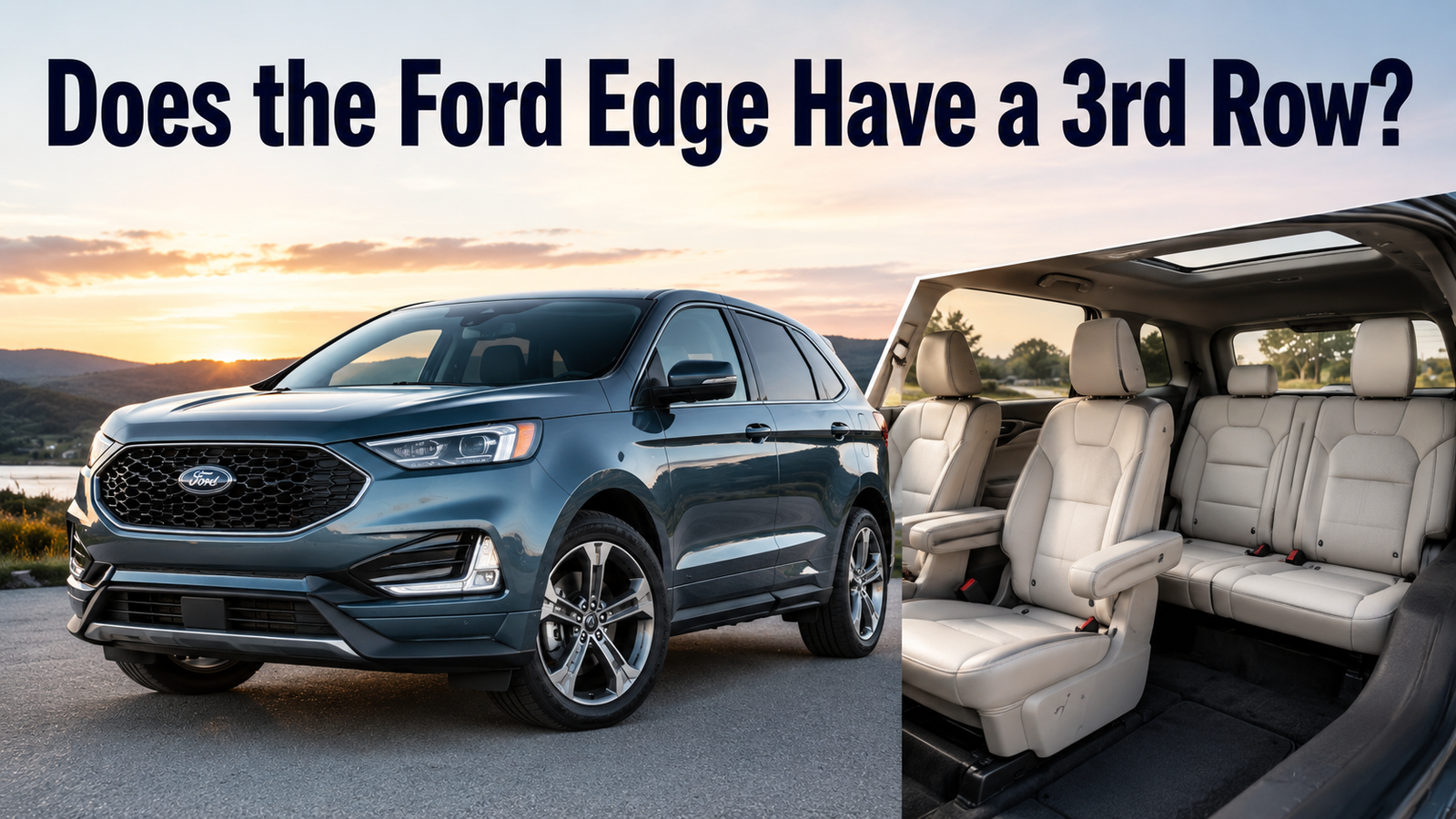
A lot of shoppers search for “does the Ford Edge have a 3rd row” because midsize SUVs often blur the line between five-seaters and seven-seaters. Since the Edge looks spacious from the outside, many people assume it might squeeze in a few extra seats, especially when comparing it to similar-sized SUVs from other brands. This confusion is completely understandable, and it happens with several other Ford models too.
In this article, we will go through everything related to the Ford Edge’s seating setup, why Ford chose to keep it at two rows, how much interior and cargo space it actually offers, and which Ford SUVs you should look at instead if a third row is a must-have for your family. By the end, you will have a clear and complete picture of where the Edge fits into Ford’s SUV lineup.
Ford Edge Overview
The Ford Edge is a midsize crossover SUV built for buyers who want a comfortable ride without the bulk of a larger vehicle. It comfortably seats five people across two rows, front and second row only, with no version ever offering a third-row option.
What Kind of SUV Is the Ford Edge
The Edge sits in the midsize crossover category, positioned between smaller compact SUVs and Ford’s larger three-row models. It is built on a car-like platform rather than a truck frame,
which gives it smoother handling and a more comfortable ride for city and highway driving alike. This platform choice is also part of why the Edge stays limited to two rows, since the body structure is not designed to stretch further back.
Seating Capacity Explained
Every trim of the Ford Edge, from the base SE to the sportier ST trim, comes with the same five-passenger seating arrangement. Two people sit up front, and three can fit in the second row, though the middle seat is best suited for shorter trips due to a raised floor hump.
This consistency across trims means shoppers do not need to compare seating capacity between different Edge versions.
Model Years Covered
The current generation of the Ford Edge has kept its two-row layout since it was introduced, and earlier generations followed the same approach.
There has never been a factory version of the Edge with three rows of seating at any point in its production history. This makes the answer to “does the Ford Edge have a 3rd row” consistent no matter which model year you are researching.
Why the Ford Edge Doesn’t Have a 3rd Row
Ford intentionally designed the Edge to prioritize cargo room and driving comfort over extra seating. The vehicle’s size and platform simply were not built with a third row in mind, and that is a deliberate part of its identity in Ford’s lineup.
Vehicle Platform and Size Limitations
The Edge is built on a unibody platform that is shorter in wheelbase compared to Ford’s three-row SUVs like the Explorer.
Adding a third row would require significant structural changes, which would essentially turn it into a different vehicle altogether. This is why the physical dimensions of the Edge naturally rule out any extra row of seats.
Ford’s Positioning Strategy
Ford already has larger SUVs covering the three-row segment, so the Edge is positioned specifically to serve buyers who don’t need that extra seating.
This strategy avoids overlap within Ford’s own lineup and gives customers a clear choice based on how many passengers they typically carry. It also allows the Edge to remain lighter and more efficient than bigger three-row alternatives.
Cargo Space Versus Passenger Space Trade-Off
Because the Edge skips a third row, it offers generously sized cargo area behind the second row instead. Families who prioritize hauling gear, strollers, or luggage over carrying extra passengers often find this trade-off works in their favor.
This balance of space is one of the Edge’s strongest selling points among two-row SUVs.
Ford Edge Interior and Seating Details
The interior of the Edge is designed around comfort and practicality for up to five occupants. Both rows offer solid legroom and headroom, making it a comfortable choice for daily commuting and road trips alike.
Front Row Features
The front seats in the Edge offer supportive cushioning and, depending on trim, options like heating, ventilation, and power adjustment.
Legroom and headroom up front are generous, making longer drives comfortable for both driver and front passenger. Higher trims also add extra convenience features like memory seat settings.
Second Row Space and Legroom
The second row provides ample knee room for adults, along with reclining seatbacks on most trims for added comfort.
Rear passengers also get their own air vents and USB ports on many trims, which helps on longer journeys. This is one of the more spacious second rows in the two-row midsize SUV category.
Cargo Capacity With Seats Up or Down
With the second row in place, the Edge offers a solid amount of cargo room for groceries, luggage, or sports equipment.
Folding the second row flat opens up a much larger cargo area, making it easier to transport bulkier items like furniture or bikes. This flexibility is part of why buyers who don’t need a third row still find the Edge highly practical.
Ford SUVs That Do Have a 3rd Row
If a third row is important to you, Ford offers several other SUVs specifically built with that extra row in mind. These models are larger than the Edge and are positioned higher in Ford’s SUV lineup.
Ford Explorer
The Ford Explorer is a midsize SUV that comfortably seats up to seven passengers across three rows. It offers more overall length and a taller body than the Edge, giving it the extra room needed for that third row. The Explorer is a natural step up for Edge shoppers who realize they need more seating.
Ford Expedition
The Ford Expedition is a full-size SUV offering seating for seven to eight passengers, depending on configuration. It has significantly more interior volume than the Edge or Explorer, making it suited for larger families or those who frequently carry more passengers and cargo together. Its third row also offers more usable space for adults compared to smaller SUVs.
Ford Expedition Max
The Expedition Max is a stretched version of the standard Expedition, offering even more cargo room behind the third row.
This makes it ideal for families who need both seven-plus passenger capacity and substantial luggage space at the same time. It represents the largest seating and cargo option in Ford’s current SUV lineup.
Comparison Table
| Model | Rows | Seating Capacity | Best For |
| Ford Edge | 2 | 5 passengers | Small families, cargo-focused buyers |
| Ford Explorer | 3 | Up to 7 passengers | Growing families needing extra seats |
| Ford Expedition | 3 | 7 to 8 passengers | Large families, frequent long trips |
| Ford Expedition Max | 3 | 7 to 8 passengers | Large families needing extra cargo room too |
Who Should Buy the Ford Edge Anyway
The Edge remains a smart pick for a specific type of buyer, even without a third row. Knowing whether you fit this profile can help confirm if the Edge still matches your needs.
Small Families Up to Five People
For households with one or two children, the Edge’s five-seat layout is often more than enough. It avoids the extra length and higher fuel consumption that typically come with three-row SUVs, while still offering a comfortable ride for the whole family.
Couples or Individuals Wanting Cargo Space
Buyers without kids, or those who mainly travel as a couple, often appreciate the Edge’s balance of passenger comfort and cargo capacity. It offers enough room for road trips, outdoor gear, or shopping hauls without the bulk of a larger SUV.
City Driving and Parking Ease
Thanks to its midsize footprint, the Edge is easier to park and maneuver in tight city spaces compared to three-row SUVs. This makes it a popular choice for buyers who spend most of their driving time in urban or suburban areas rather than on long highway trips.
Alternatives If You Need Three Rows
Beyond Ford’s own lineup, several competitors offer three-row seating in a similar midsize category. The Hyundai Santa Fe and Kia Telluride are both popular choices, along with the Toyota Highlander and Chevrolet Traverse.
These competitor models are worth comparing against the Ford Explorer if you’re shopping across brands rather than staying loyal to Ford specifically.
Frequently Asked Questions
Did any Ford Edge model year ever have a 3rd row?
No, no generation or model year of the Ford Edge has ever included a third row. It has always been a two-row, five-passenger SUV.
What’s the difference between Edge and Explorer?
The Explorer is larger, offers three rows and seating for up to seven, while the Edge is smaller with two rows and seating for five.
Can you add a 3rd row aftermarket?
No, the Edge’s platform and body structure do not support adding a third row, and no legitimate aftermarket solution exists for this.
Is the Ford Edge being discontinued?
Ford has shifted focus toward electric and SUV models in recent years, so it’s worth checking current Ford announcements for the latest production status.
Conclusion
The Ford Edge does not have a 3rd row, and that is intentional rather than a limitation. It is built as a five-passenger, two-row SUV that prioritizes cargo space, comfort, and city-friendly handling over extra seating.
If you need more than five seats, the Explorer, Expedition, or Expedition Max are the better Ford options to consider instead.
Related Articles
What Does the F Stand for in F150?
How Long Do Ford Fusions Last? Complete Mileage and Longevity Guide
How Much Is a 1953 Ford Jubilee Tractor Worth?
What Is a Ford FE Motor? Complete Guide to History, Specs & Variants