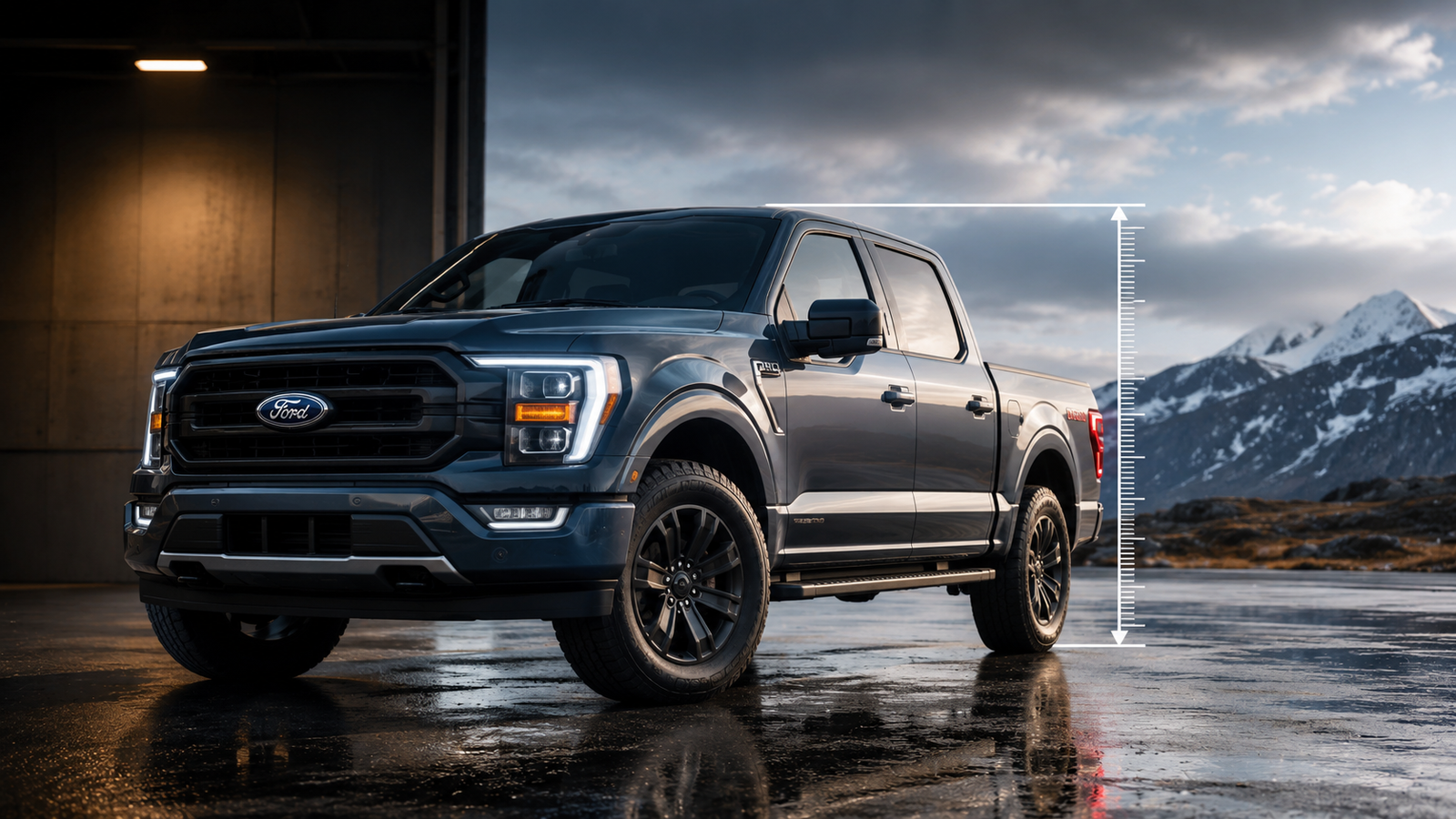

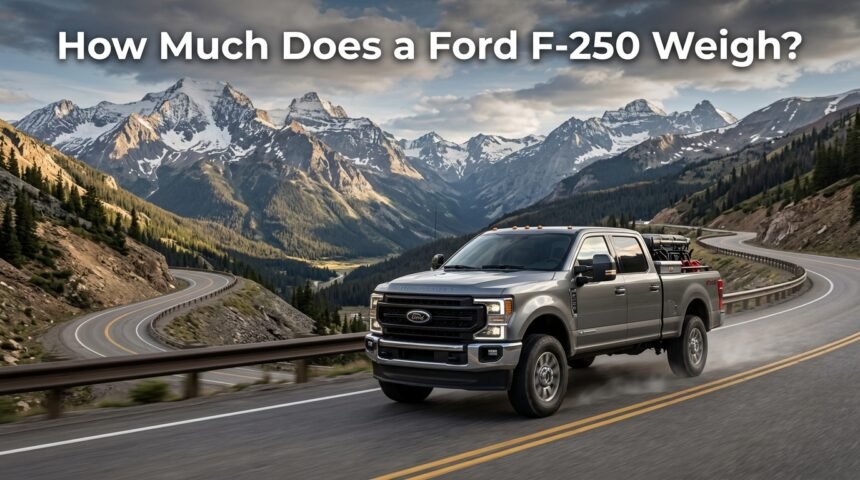
A Ford F-250 typically weighs between 6,000 and 7,500 pounds in curb weight, depending on the cab style, engine choice, and drivetrain configuration. Gas-powered models usually sit on the lighter end of that range, while diesel-equipped trucks with four-wheel drive push closer to the upper limit.
The exact number also shifts based on trim level, added options, and the model year you are looking at. This guide breaks every one of those factors down so you know exactly what to expect before you buy, tow, or haul with an F-250.
Knowing how much does a Ford F250 weigh is not just trivia for truck enthusiasts. It directly affects how much cargo you can safely carry, how big a trailer you can pull, and whether you are staying within legal limits on the road. Below, we walk through every weight-related term, compare configurations, and show you exactly where to find your specific truck’s numbers.
Understanding Truck Weight Terminology
Before comparing numbers, it helps to know what each weight term actually measures. Trucks are rated using several different figures, and mixing them up is one of the most common mistakes truck owners make when calculating what their F-250 can safely carry or pull.
Curb Weight
Curb weight is how much the truck weighs on its own, with a full tank of fuel and all standard equipment, but without any passengers or cargo loaded inside.
This is the number most people mean when they ask how much does a Ford F250 weigh, and it forms the baseline for every other calculation. Manufacturers list this figure for each specific trim and cab combination.
Gross Vehicle Weight Rating (GVWR)
GVWR is the maximum total weight the truck is allowed to reach once you add passengers, cargo, and fuel on top of the curb weight.
This figure is set by Ford based on the strength of the frame, suspension, and brakes, and it should never be exceeded. Exceeding GVWR can void warranty coverage and create real safety risks on the road.
Gross Combined Weight Rating (GCWR)
GCWR covers the truck plus a trailer together, representing the absolute maximum combined weight the powertrain and chassis can handle.
This number matters most for anyone planning to tow a heavy trailer, camper, or equipment hauler. It is almost always higher than the GVWR alone since it accounts for the trailer’s weight as well.
Payload Capacity
Payload capacity tells you how much weight you can legally load into the cab and bed combined, calculated by subtracting curb weight from GVWR.
A lighter curb weight generally means more payload room, which is why gas-engine trucks sometimes carry more cargo than heavier diesel versions despite having less towing power.
Towing Capacity
Towing capacity is the maximum weight the truck can pull behind it using a trailer hitch, and it is separate from payload. This number depends heavily on engine choice, axle ratio, and whether the truck has the factory tow package installed.
Dry Weight vs. Wet Weight
Dry weight refers to the truck without any fluids such as fuel, oil, or coolant, while wet weight includes all of those fluids topped off. Curb weight figures published by Ford are wet weight numbers, since that reflects how the truck sits when it is actually ready to drive.
Ford F-250 Curb Weight by Cab Style
Cab style has a noticeable effect on overall weight since larger cabs require more steel, glass, and interior components. The F-250 comes in three cab configurations, and each one adds a meaningful jump in weight over the last.
Regular Cab
The Regular Cab is the lightest configuration, typically weighing between 6,000 and 6,300 pounds depending on engine and drivetrain. This cab style has a single row of seating and is most common on work-focused or fleet trucks rather than personal vehicles.
SuperCab (Extended Cab)
The SuperCab adds rear jump seats and extra body length, pushing curb weight up to roughly 6,400 to 6,700 pounds in most builds. This configuration is a popular middle ground for buyers who want some extra seating without the full size of a crew cab.
Crew Cab
The Crew Cab is the heaviest and most popular option, often weighing between 6,700 and 7,200 pounds before factoring in engine or drivetrain choices. Its full four-door design and larger frame make it the go-to choice for families and buyers who regularly carry passengers.
2WD vs 4WD Weight Differences
Four-wheel drive systems add a transfer case, front differential, and additional driveline components, typically adding 300 to 500 pounds compared to a two-wheel drive version of the same truck. This difference stays fairly consistent across cab styles and trim levels.
Ford F-250 Weight by Engine Option
Engine choice is one of the biggest single factors affecting how much does a Ford F250 weigh, since diesel engines are built with heavier internal components to handle higher compression and torque loads.
Gas V8 Engine Weight Impact
The gas V8 engine options are lighter than their diesel counterparts, generally adding less bulk over the front axle. Trucks equipped with a gas engine tend to have more available payload capacity as a result, making them a practical choice for buyers who prioritize cargo hauling over maximum towing.
Diesel (Power Stroke) Engine Weight Impact
The Power Stroke diesel engine is considerably heavier than the gas V8, often adding 800 to 1,000 pounds to the front of the truck. This extra weight is offset by significantly higher torque output, which is why diesel trucks dominate in towing capacity despite weighing more overall.
Weight Difference: Gas vs. Diesel Models
On average, a diesel F-250 will weigh 800 to 1,000 pounds more than an identically configured gas model. Buyers choosing between the two should weigh this trade-off carefully, since the diesel’s added weight reduces payload even as it increases towing strength.
Ford F-250 Weight by Model Year
Ford has updated the F-250 across several generations, and each redesign has brought changes in materials and structure that shifted overall weight.
Older Generations (1999–2010)
Trucks from this era generally used heavier steel body panels and had less weight-optimized frames, placing many models toward the higher end of the standard curb weight range. These older trucks are simpler mechanically but tend to run heavier per comparable configuration.
Mid-Generation (2011–2016)
This generation introduced updated engines and some structural refinements that kept weight relatively stable compared to the previous era, with only minor increases tied to added safety and comfort features. Most trucks from this period fall solidly within the 6,500 to 7,200 pound range.
Current Generation (2017–Present)
The current generation uses a high-strength steel frame paired with an aluminum body on many trim levels, which helps offset the weight added by modern technology and safety equipment. Despite more standard features, weight has stayed comparable to earlier generations rather than climbing significantly.
Average Weight Comparison Table
| Model Year Range | Average Curb Weight (Gas) | Average Curb Weight (Diesel) |
| 1999–2010 | 6,200 – 6,800 lbs | 7,000 – 7,600 lbs |
| 2011–2016 | 6,300 – 6,900 lbs | 7,100 – 7,700 lbs |
| 2017–Present | 6,400 – 7,000 lbs | 7,200 – 7,800 lbs |
GVWR and Payload Capacity Explained
The GVWR on most F-250 models ranges from 9,900 to 10,000 pounds, which sets the ceiling for how much total weight the truck can carry once passengers and cargo are added. Subtracting curb weight from this figure gives you the truck’s payload capacity, which typically lands between 2,700 and 3,900 pounds depending on configuration.
Keep in mind that adding aftermarket accessories, a full fuel tank, or extra passengers all eat into this available payload before you even load cargo in the bed.
Towing Capacity vs. Weight
A heavier truck is not automatically a better tower, since towing capacity depends more on engine torque, frame strength, and axle gearing than on curb weight alone. The F-250 offers a maximum towing capacity that can exceed 20,000 pounds with the right configuration, well beyond what its own curb weight would suggest.
Bed length and wheelbase also play a role here, since a longer wheelbase generally improves towing stability by better distributing the trailer’s tongue weight across the frame.
Factors That Affect F-250 Weight
Beyond the core specs already covered, several smaller factors combine to shift a truck’s final weight in either direction. Trim level plays a role since higher trims like King Ranch, Platinum, and Limited add extra insulation, leather trim, and tech features that pack on additional pounds compared to a base XL model.
Optional packages such as tow packages or off-road suspension upgrades also add weight through reinforced components and skid plates. Bed length matters too, with the longer 8-foot bed adding more weight than the shorter 6.75-foot version.
Finally, aftermarket accessories like lift kits, heavy-duty bumpers, and toolboxes can add several hundred pounds beyond the factory curb weight listed on paper.
F-250 Weight Compared to Other Trucks
Placing the F-250 alongside its main rivals helps put its weight figures into perspective for shoppers cross-shopping heavy-duty trucks.
| Truck Model | Approximate Curb Weight |
| Ford F-150 | 4,500 – 5,700 lbs |
| Ford F-250 | 6,000 – 7,500 lbs |
| Ford F-350 | 6,500 – 7,800 lbs |
| Ram 2500 | 6,300 – 7,700 lbs |
| Chevy Silverado 2500HD | 6,200 – 7,600 lbs |
The F-250 sits noticeably heavier than the half-ton F-150 due to its reinforced frame and heavier-duty components, while staying close in weight to its main heavy-duty rivals from Ram and Chevrolet. Compared to the F-350, the F-250 is generally a few hundred pounds lighter thanks to a slightly lighter-duty rear axle and suspension setup.
Why Knowing Your Truck’s Weight Matters
Understanding your exact truck weight matters for more than curiosity. Many states require trucks over a certain GVWR to stop at weigh stations, and running overweight can result in fines.
Matching your truck’s payload and towing figures to your trailer or cargo load keeps hitch setups safe and prevents excessive strain on the frame and suspension. Weight also affects fuel efficiency, since a heavier configuration will generally return lower MPG than a lighter one.
Bridges and certain roads also carry posted weight restrictions that fully loaded heavy-duty trucks need to respect.
How to Find Your Exact F-250 Weight
The most reliable way to find your specific truck’s weight is to check the certification label located on the driver’s side door jamb, which lists both curb weight and GVWR for that exact vehicle.
The owner’s manual also includes weight specifications broken down by configuration. For the most accurate real-world number, especially after adding accessories, driving to a public CAT scale at a truck stop will give you an actual weighed figure rather than a factory estimate.
Frequently Asked Questions
How much can an F-250 tow?
Depending on configuration, an F-250 can tow anywhere from around 12,000 pounds up to over 20,000 pounds when properly equipped with the diesel engine and factory tow package.
What’s the difference between F-250 and F-350 weight?
The F-350 typically weighs a few hundred pounds more than the F-250 due to its heavier-duty rear axle and suspension components built for higher payload and towing ratings.
Does 4×4 add significant weight?
Yes, four-wheel drive typically adds 300 to 500 pounds over an equivalent two-wheel drive model due to the extra driveline hardware involved.
How much does a diesel F-250 weigh vs gas?
A diesel F-250 generally weighs 800 to 1,000 pounds more than a comparable gas model because of the heavier engine block and related components.
Conclusion
So, how much does a Ford F250 weigh? The honest answer is that it depends on cab style, engine, drivetrain, and model year, but most trucks fall between 6,000 and 7,500 pounds in curb weight.
Knowing your specific configuration’s numbers, along with GVWR and payload figures, helps you load, tow, and drive safely within the truck’s real limits.
Related Articles
What Does the F Stand for in F150?
Ford Bronco Lease Deals: A Complete Guide to Getting the Best Offer
How to Open a Ford Key Fob: Easy Step-by-Step Guide (2026)
Ford Ranger Lease Deal 2026: Everything You Need to Know Before You Sign
Is a 1000A Jump Starter Good for a 2007 Ford Escape? Full Guide