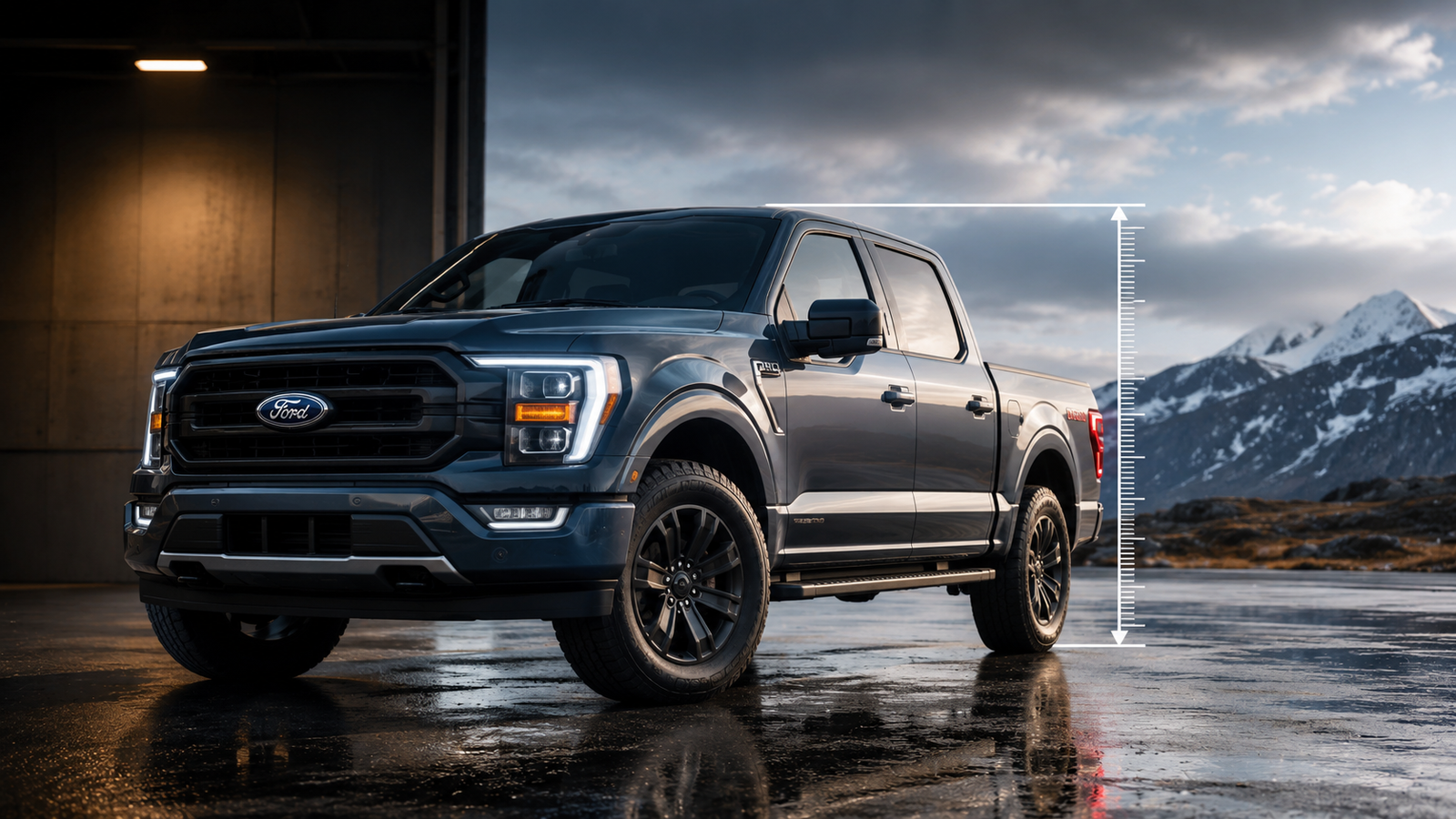

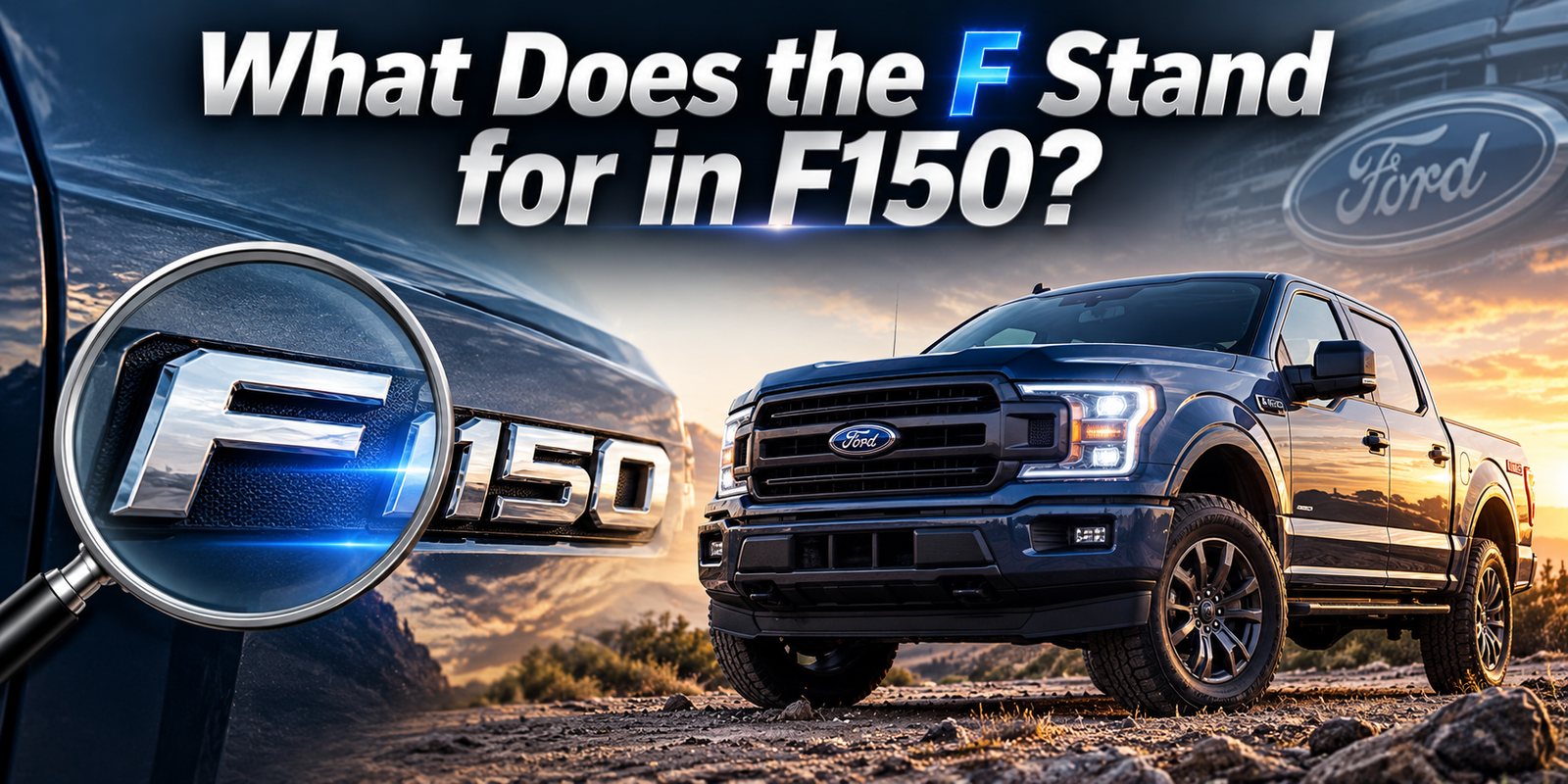
The F in F150 simply stands for “Ford,” and it has been part of the company’s truck naming system since 1948. Ford created the F-Series lineup as a fresh generation of trucks after World War II, and the letter F was chosen to represent the brand itself rather than any hidden technical term.
Many drivers assume the letter must stand for something like “Freight” or “Ford Tough,” but that is not accurate. The number 150 that follows the letter refers to the truck’s weight class and payload capacity, not a separate meaning of its own.
Together, “F” for Ford and “150” for the vehicle’s class form the complete name of one of the most recognized trucks in the world. Understanding this naming pattern also helps explain why Ford uses similar labels like F250 and F350 for its heavier-duty models.
The History Behind the Ford F-Series Name
Ford introduced the F-Series in 1948 as part of a completely redesigned truck lineup meant to compete in the growing post-war market. The naming system used a simple letter-and-number combination that made it easy for buyers to understand a truck’s size and purpose at a glance.
When Ford Introduced the F-Series
Ford launched its first F-Series trucks in 1948, replacing the older truck models that had been sold since the 1930s. This new lineup was built specifically for the American market and introduced a modern cab design, improved comfort, and better visibility for drivers.
It marked the beginning of a naming tradition that Ford has kept consistent for more than seventy years, making the F-Series one of the longest-running vehicle nameplates in automotive history.
The Original Naming Convention
The earliest F-Series trucks were labeled F-1, F-2, and F-3, with each number representing a different payload capacity and truck size. The F-1 was the lightest half-ton truck, while the F-2 and F-3 offered increasingly heavier-duty capabilities for work and commercial use.
This numbering approach gave customers a quick way to compare models without needing to read detailed specification sheets, and it laid the foundation for the naming system still used today.
From F-1 to F-100 to F-150
In 1953, Ford updated its naming system and renamed the F-1 to the F-100, aligning the numbers more closely with actual payload ratings in pounds. This change lasted for over two decades until 1975, when Ford introduced the F-150 as a new option positioned between the F-100 and the heavier F-250.
The F-150 was created partly to help buyers avoid certain emissions regulations that applied to half-ton trucks at the time, and it eventually became the most popular version in the entire lineup.
Why Ford Chose the Number 150
The number 150 was not selected randomly; it reflects a specific engineering and regulatory decision made by Ford in the mid-1970s. This section explains how the number ties directly into the truck’s classification and how it compares with other models in the same family.
The Payload and Class Rating Explanation
Vehicle manufacturers commonly use numbers to represent a truck’s Gross Vehicle Weight Rating, or GVWR, which indicates how much total weight the vehicle can safely carry.
The F-150 sits in a weight class slightly above the traditional half-ton rating, giving it more hauling capacity while still qualifying as a light-duty pickup. This numbering approach allows customers to identify a truck’s strength and purpose simply by reading its model name.
How F-100 Became F-150 in 1975
By the mid-1970s, half-ton trucks like the F-100 were facing new emissions standards that added cost and complexity to their production. Ford responded by creating the F-150, a slightly heavier-rated truck that fell just outside those stricter regulations while still serving the same everyday customers.
Over time, the F-150 outsold the F-100 so significantly that Ford eventually discontinued the F-100 entirely and made the F-150 its standard light-duty offering.
Comparing F-150 with F-250 and F-350
The F-150 remains Ford’s light-duty truck, while the F-250 and F-350 are considered Super Duty models built for heavier towing and hauling needs. The table below summarizes the basic differences between these three popular models.
| Model | Duty Class | Typical Use |
| F-150 | Light-duty | Daily driving, light towing, personal use |
| F-250 | Heavy-duty | Work trucks, moderate towing and hauling |
| F-350 | Heavy-duty | Commercial use, heavy towing and trailers |
This structure shows why the F-150 remains the most popular choice for everyday drivers, while the F-250 and F-350 cater to buyers who need significantly more towing power.
Common Misconceptions About the F150 Name
Many people search for the meaning of the F in F150 expecting a more elaborate or technical explanation than the truth actually offers. This section clears up some of the most common myths circulating online.
Myths About What F Could Stand For
Some popular guesses include ideas like “Ford Freight,” “Ford Fast,” or “Ford Function,” none of which are accurate according to Ford’s own history.
These theories likely spread because people assume a brand as large as Ford must have a more descriptive meaning behind such an iconic name. In reality, Ford kept the naming simple, and the letter has always represented the company name itself rather than a specific feature or slogan.
Comparing Ford’s System with Other Truck Brands
Other truck manufacturers use very different naming systems, which can add to public confusion when comparing brands.
Chevrolet and GMC use numbers like 1500, 2500, and 3500 to represent similar weight classes, while Ram trucks follow a nearly identical numbering pattern. Ford remains unique in pairing its brand initial with a three-digit number, which is part of why the “what does the F stand for” question is searched so frequently.
The F-Series Lineup Explained
Ford’s F-Series is not limited to just the F-150; it includes several models designed for different levels of power, size, and work capability. Each model serves a distinct type of buyer, from personal drivers to large commercial operations.
F-150: The Light-Duty Favorite
The F-150 is designed for everyday drivers who want a capable truck without the size or cost of a heavy-duty model.
It offers a strong balance of comfort, fuel efficiency, and hauling capability, which is why it remains Ford’s best-selling vehicle. Most personal truck buyers in the United States choose the F-150 because it fits both daily commuting and occasional work needs.
F-250 and F-350: The Super Duty Models
These heavier trucks are built for buyers who regularly tow trailers, haul equipment, or work in demanding industries like construction and agriculture.
They typically use stronger frames, larger engines, and higher payload capacities compared to the F-150. Many contractors and farmers choose these models specifically because they can handle loads that would strain a lighter truck.
F-450 and F-550: Heavy Commercial Trucks
At the top of the lineup, the F-450 and F-550 are built almost entirely for commercial and industrial use rather than personal driving.
These trucks often serve as the base for specialized equipment like tow trucks, dump beds, or utility vehicles. Their massive towing and payload ratings make them essential tools for businesses that need maximum hauling power.
Why the F-150 Became So Popular
The F-150’s popularity did not happen overnight; it grew through decades of reliability, marketing, and consistent improvement. This section looks at the key reasons the truck became a cultural and commercial phenomenon.
Decades as America’s Best-Selling Vehicle
The F-150 has held the title of best-selling vehicle in the United States for many consecutive years, outperforming even popular sedans and SUVs.
This success comes from its reputation for durability, its wide range of trim options, and its ability to serve both work and personal needs. Ford has continued refining the F-150 with new technology and materials to keep it competitive against rivals like the Chevrolet Silverado and Ram 1500.
A Reputation Built on Durability
Ford has invested heavily in materials like military-grade aluminum alloy to make the F-150 lighter yet stronger than earlier steel-bodied models.
This focus on durability has helped build long-term trust among truck buyers who expect their vehicle to last for many years of heavy use. The truck’s reputation for toughness has become part of its identity, reinforcing why so many buyers stay loyal to the brand.
Cultural Recognition and Everyday Presence
Beyond its technical specs, the F-150 has become deeply embedded in American culture, appearing in advertising, film, and everyday conversation.
Its presence on farms, job sites, and suburban driveways alike has made it a symbol of practicality and reliability. This widespread visibility is part of why so many people become curious about small details like what does the F stand for in F150.
Fun Facts About the F-150
The F-150 has achieved several notable milestones throughout its long production history. The list below highlights some of the most interesting facts about the truck.
- The F-Series has been in continuous production since 1948, making it one of the oldest nameplates in the auto industry.
- The F-150 has been Ford’s best-selling vehicle for decades, often outselling every other vehicle in the United States.
- The Ford F-150 Raptor is a high-performance off-road variant built for extreme terrain and speed.
- The F-150 Lightning introduced an all-electric version of the truck, expanding the lineup into new technology.
- Ford switched to an aluminum body for the F-150 in 2015 to reduce weight and improve fuel efficiency.
Conclusion
The F in F150 stands simply for Ford, while the number 150 reflects the truck’s light-duty weight class within the larger F-Series lineup.
This naming system, created in 1948 and refined over the decades, has helped Ford build one of the most trusted and recognizable trucks in automotive history. Understanding this background makes it easier to see why the F-150 remains such a popular choice among personal and professional drivers alike.
FAQs
Does the F ever stand for anything else?
No, across Ford’s entire F-Series lineup, the F consistently stands for Ford and has never officially represented another word.
What does the number 150 mean exactly?
The number 150 refers to the truck’s weight class and payload rating, positioning it as a light-duty model within the F-Series.
What is the difference between F-150 and F-250?
The F-150 is a light-duty truck for everyday use, while the F-250 is a heavier-duty model designed for stronger towing and hauling needs.
Related Articles
Does the Ford Edge Have a 3rd Row? Full Seating Guide (2026)
How Long Do Ford Fusions Last? Complete Mileage and Longevity Guide
How Much Is a 1953 Ford Jubilee Tractor Worth?
What Is a Ford FE Motor? Complete Guide to History, Specs & Variants