
If you have spent any time browsing truck forums, scrolling through automotive social media, or chatting with a Ford enthusiast, you have probably come across the term “OBS.” At first glance, it might look like just another confusing acronym thrown around by car people.
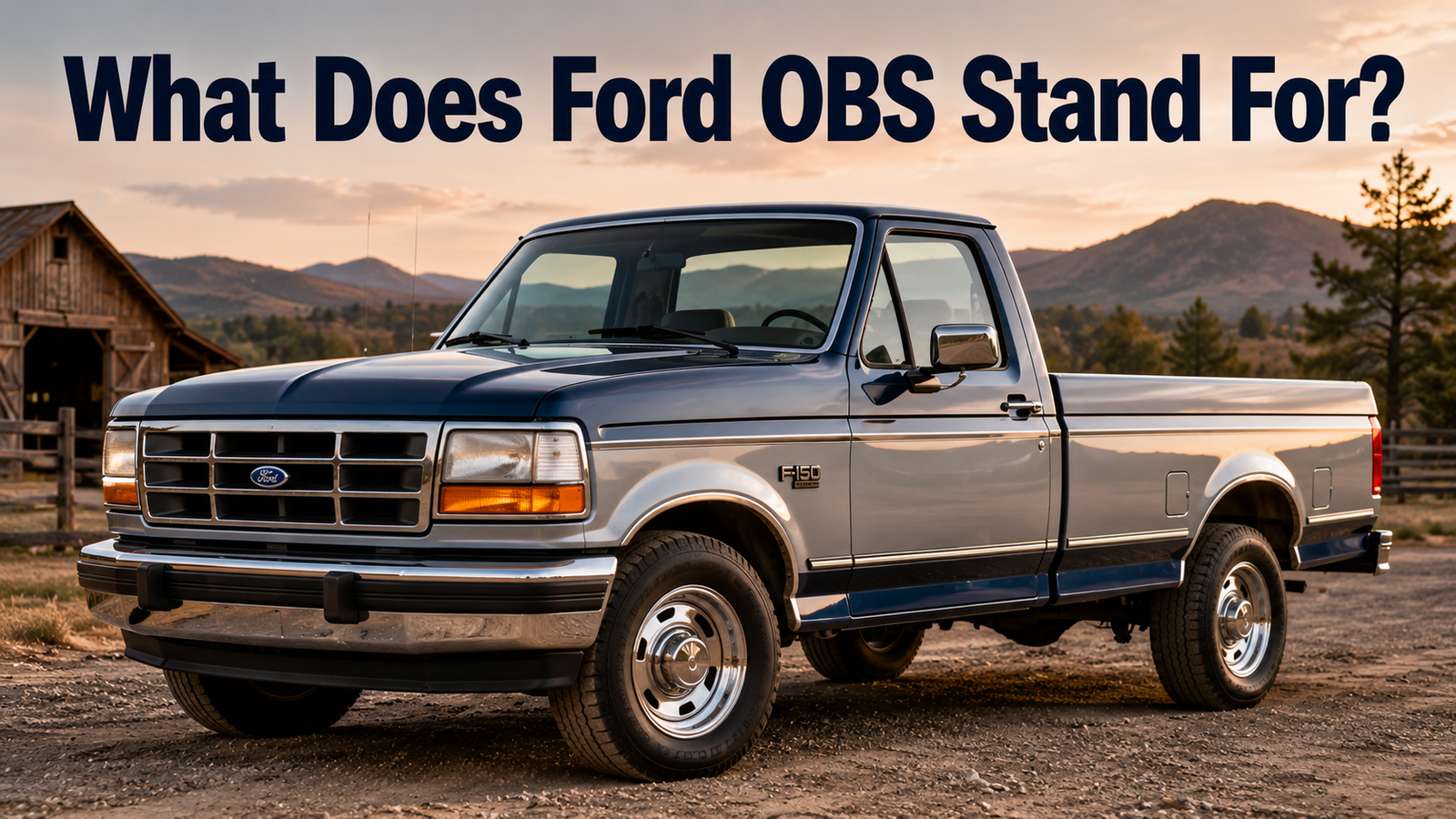
But once you understand it, everything starts to make sense. So, what does Ford OBS stand for? The simple answer is “Old Body Style.” This nickname is used by truck lovers to describe a specific generation of Ford trucks and SUVs that were built between roughly 1980 and 1996.
The term did not come from Ford’s official marketing department. Instead, it grew naturally out of enthusiast culture as a way to separate this particular design era from the ones that came before and after it. Over time, the phrase became so widely accepted that it is now a standard part of truck slang, especially among people who buy, sell, restore, or modify older Ford pickups.
In this guide, we will walk through everything there is to know about Ford OBS trucks, including their history, the models included in this generation, how they compare to other Ford truck eras, why they remain so popular today, common engine options, buying tips, and answers to the most frequently asked questions.
History of the Ford OBS Generation
To understand why the OBS nickname exists, it helps to look at how Ford truck design evolved over the decades. Ford has continuously updated the body style, shape, and engineering of its trucks since the company began building them. Each major redesign created a new “generation” of trucks that looked and felt different from the one before it.
The generation now referred to as OBS came after Ford’s earlier “Bullnose” trucks, which were produced through the late 1970s and mid-1980s. When Ford introduced its next major redesign in 1980, and later refined it further with updates through the early 1990s, the trucks took on a more aerodynamic, boxy-yet-rounded appearance that felt modern for its time. This body style stuck around for well over a decade, making it one of the longer-running truck designs in Ford’s history.
When Ford eventually replaced this design with the more rounded, aerodynamic look introduced in the late 1990s, enthusiasts needed a simple way to talk about the older trucks without confusion. That is when the community began calling the earlier generation the “Old Body Style,” which was quickly shortened to OBS. The label was not official, but it stuck, and it is now the standard way people refer to this era both online and in person.
Which Ford Trucks Are Considered OBS?
Not every older Ford truck qualifies as OBS. The term specifically refers to a defined range of model years and vehicle types. Below is a simple breakdown of what is typically included.
| Vehicle | Approximate OBS Years |
|---|---|
| Ford F-150 | 1980–1996 |
| Ford F-250 | 1980–1996 |
| Ford F-350 | 1980–1996 |
| Ford Bronco | 1980–1996 |
These trucks share a similar chassis design, body construction, and overall styling philosophy, which is why they are grouped together under one nickname. While there were small design refreshes within this range, such as updated grilles, headlights, and interior features, the overall “bones” of the truck remained consistent enough for enthusiasts to view them as a single family.
OBS vs Other Ford Truck Generations
Ford truck fans love categorizing older models by nickname, and OBS is just one piece of a much larger puzzle. To really understand where OBS fits in, it helps to compare it against the generations that came before and after it.
The “Dentside” trucks, produced from roughly 1973 to 1979, got their name from the distinctive crease or dent-like line running along the side of the body. These trucks have a boxier, more industrial look that many people associate with classic 1970s pickups.
Following the Dentside era, Ford introduced what fans call the “Bullnose” generation, built from about 1980 to 1986. These trucks featured a more rounded front end, which is where the “Bullnose” nickname comes from. Interestingly, some early Bullnose trucks technically fall within the broader OBS range, which is why you may occasionally see overlap in enthusiast discussions.
After the OBS era ended, Ford moved into what many refer to as the “New Body Style,” starting around 1997. These trucks featured a smoother, more rounded, and more modern aerodynamic design that set the stage for the Ford trucks we recognize today.
Here is a simplified comparison table to make the differences easier to visualize:
| Era Nickname | Approximate Years | Defining Look |
|---|---|---|
| Dentside | 1973–1979 | Boxy body with side crease |
| Bullnose | 1980–1986 | Rounded front end |
| OBS (Old Body Style) | 1980–1996 | Boxy-rounded transitional design |
| New Body Style | 1997+ | Smooth, modern, aerodynamic |
As you can see, OBS actually overlaps with the tail end of the Bullnose era before continuing on its own through the mid-1990s.
Why Ford OBS Trucks Are Popular Today?
It might seem surprising that trucks built decades ago are still highly sought after, but there are several practical and emotional reasons why OBS Ford trucks continue to attract attention.
One of the biggest draws is simplicity. These trucks were built during a time before modern vehicles became loaded with complex computer systems, sensors, and electronics. This makes them easier to diagnose, repair, and maintain, even for hobbyists working in a home garage rather than a professional shop.
Another major reason for their popularity is how easy they are to customize. Because OBS trucks have been around for so long, the aftermarket support is massive. Lift kits, wheels, lighting upgrades, interior modifications, and performance parts are widely available and often affordable compared to parts for newer vehicles.
Affordability is also a key factor. While prices have been rising as OBS trucks gain more recognition, they are still generally more budget-friendly than comparable classic trucks from other manufacturers or other Ford generations that have become highly collectible.
Finally, these trucks are simply versatile. Owners use them for off-roading, towing, daily driving, and even as dedicated project vehicles. Their rugged, boxy design has also become fashionable again, especially among younger truck enthusiasts who appreciate the nostalgic look.
Common Engines Found in OBS Ford Trucks
Engine options played a big role in making OBS trucks so dependable and popular among long-term owners. Ford offered a range of gas and diesel engines throughout this generation, giving buyers flexibility depending on their needs.
The 5.0L V8 was one of the most common engines offered, known for being a reliable and relatively fuel-efficient option for everyday use. The larger 5.8L V8 offered more power, making it a popular choice for those who needed extra towing capability.
For buyers who wanted serious diesel power, the 7.3L Power Stroke diesel became legendary. Introduced in the early 1990s, this engine is still praised today for its durability and is considered one of the most dependable diesel engines Ford has ever produced. There was also a 7.5L big-block gas V8 available for those who wanted maximum towing and hauling capacity without going the diesel route.
Buying Guide: What to Look for in an OBS Ford
If you are considering buying an OBS Ford truck, a little preparation goes a long way. Since these vehicles are decades old, careful inspection is essential before making a purchase.
Rust is one of the most important things to check, especially around the frame, rocker panels, wheel wells, and bed. Frame rust can be a serious and expensive issue, so it is worth inspecting the truck from underneath rather than relying on a quick visual glance.
Mileage expectations vary widely depending on how well the truck was maintained. It is not unusual to find OBS trucks with well over 150,000 or even 200,000 miles, especially those equipped with the diesel engine, since these engines are known for long-term durability when properly cared for.
Common mechanical issues to watch for include worn suspension components, aging electrical systems, and transmission wear, particularly in trucks that were used for heavy towing throughout their life. Asking for maintenance records, if available, can help you understand how the truck was treated over the years.
Pricing can vary significantly based on condition, mileage, engine type, and location. Diesel-powered OBS trucks, especially those with the 7.3L Power Stroke, tend to command higher prices due to their reputation and demand.
OBS Ford in Pop Culture and Enthusiast Communities
The OBS nickname has grown well beyond casual conversation and is now a recognized part of truck culture online. Instagram and TikTok are filled with OBS truck builds, showcasing everything from stock, unmodified originals to heavily customized show trucks with lift kits, oversized wheels, and custom lighting setups.
YouTube channels dedicated to restoring, repairing, and modifying OBS trucks have also grown in popularity, giving new owners a wealth of tutorials and inspiration. Online forums and local truck clubs continue to be valuable resources for parts sourcing, technical advice, and community support, helping keep the OBS legacy alive for both long-time fans and newcomers just discovering these trucks for the first time.
Frequently Asked Questions (FAQ)
What years are OBS Ford trucks? OBS Ford trucks generally include model years from 1980 to 1996, covering the F-150, F-250, F-350, and Bronco.
Is OBS only for Ford or other brands too? While the term is most closely associated with Ford, some enthusiasts loosely apply similar era-based nicknames to trucks from other manufacturers, though OBS itself originated specifically within Ford truck culture.
What’s the difference between OBS and Squarebody? “Squarebody” is actually a nickname used for a specific era of Chevrolet and GMC trucks, not Ford. OBS is the Ford equivalent term, referring to a different manufacturer’s design generation from a similar time period.
Are OBS trucks good daily drivers? Yes, many owners use OBS trucks as daily drivers thanks to their simple mechanical design, strong parts availability, and dependable engine options, although older age means more frequent maintenance may be needed compared to a modern vehicle.
Conclusion
So, what does Ford OBS stand for? It stands for “Old Body Style,” a nickname created by enthusiasts to describe the Ford F-150, F-250, F-350, and Bronco models built between 1980 and 1996.
What started as a simple way to categorize an older generation of trucks has grown into a beloved corner of automotive culture, filled with passionate owners, active online communities, and a strong appreciation for straightforward, dependable engineering.
Whether you are a long-time fan or just discovering the term for the first time, OBS trucks remain a lasting symbol of rugged, no-nonsense Ford design.
Related Articles
Does the Ford Edge Have a 3rd Row? Full Seating Guide (2026)
What Does the F Stand for in F150?
How Long Do Ford Fusions Last? Complete Mileage and Longevity Guide
What Is a Ford FE Motor? Complete Guide to History, Specs & Variants
How Much Is a 1953 Ford Jubilee Tractor Worth?