
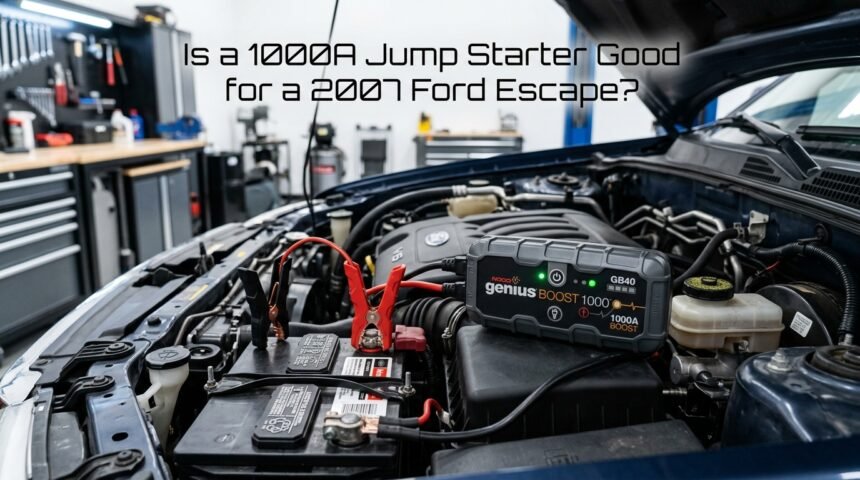
Yes, a 1000A jump starter is good for a 2007 Ford Escape and works well with both the 2.3L four-cylinder and the 3.0L V6 engine options. Most owners searching is 1000a amp jumper good for a 2007 ford escape want a short, honest answer before reading further, and the answer is simple:
your Escape only needs around 400 to 600 cranking amps to start, so a 1000A unit gives you extra power in reserve. This becomes especially useful during cold mornings, when the battery is old, or when accessories have drained the charge overnight. Below, every part of this topic is explained in detail so you can jump start your Escape safely and choose equipment that actually fits your car.
Understanding the 2007 Ford Escape’s Battery Needs
Before judging whether a 1000A jumper is suitable, it helps to know exactly how much power your Escape’s starter motor actually pulls. The battery requirement changes slightly depending on which engine sits under the hood.
Engine Options and Their Power Draw
The 2007 Ford Escape came with two engine choices, a 2.3-liter four-cylinder and a 3.0-liter V6, and each pulls a different amount of current when starting.
The four-cylinder model generally needs less cranking power than the V6, since it has fewer cylinders and a lighter compression load. Knowing which engine you own helps you understand why manufacturers rate jump starters well above the minimum requirement.
Stock Battery CCA Rating
Ford originally equipped the Escape with a battery rated between roughly 500 and 650 Cold Cranking Amps, depending on trim and engine.
This CCA number represents how much current the battery can deliver at low temperatures for a few seconds. A 1000A jump starter comfortably exceeds this stock rating, which is exactly why it performs reliably even in harsh winter conditions.
Typical Cranking Amps Required to Start
In real-world use, the Escape’s starter motor usually draws between 400 and 600 amps for the one or two seconds it takes to fire the engine.
This is far below the 1000A ceiling offered by most modern jump starters. That gap between required amps and available amps is what engineers call a safety buffer, and it is the main reason this size of jumper is considered ideal rather than excessive.
What Does 1000A Actually Mean?
The number “1000A” printed on a jump starter box does not mean the device pushes 1000 amps constantly into your battery. It refers to a short burst rating used specifically for engine ignition.
Peak Amps vs Cranking Amps Explained
Peak amps describe the maximum current a jump starter can release in a very short instant, usually less than a second, to overcome the initial resistance of a cold engine.
Cranking amps, on the other hand, refer to the sustained current needed while the starter motor physically turns the engine over. A 1000A rating is almost always the peak figure, not a continuous output, which keeps the process safe for your electrical system.
Difference Between Jumper Output and Battery CCA
A jump starter’s amp rating and a car battery’s CCA rating are measured differently, which confuses many buyers. The jump starter number reflects burst capability from a lithium or sealed battery pack, while CCA reflects sustained output at 0°F for thirty seconds.
Comparing them directly is not entirely accurate, but as a general rule of thumb, a jump starter’s peak rating should be equal to or higher than the car battery’s CCA, which the 1000A unit satisfies easily.
Why Manufacturers List High Peak Numbers
Brands advertise high peak amp numbers partly for marketing and partly to guarantee performance across different vehicle types, from small sedans to larger SUVs.
A higher number reassures buyers that the same device will work on multiple vehicles in the household, not just one specific car. This is why a 1000A rating is common even though most everyday vehicles, including the Escape, need far less.
Is 1000A Enough for a 2007 Ford Escape?
Given everything explained above, 1000A is not just enough, it is more than what your Escape will ever demand under normal conditions. This section breaks down the comparison and why the extra headroom is beneficial rather than wasted.
Comparison: Required Amps vs 1000A Capacity
The table below places the Escape’s actual power needs next to the jump starter’s rated output for a clearer picture.
| Requirement | Approximate Value |
| 2.3L engine cranking need | 350–450 amps |
| 3.0L V6 engine cranking need | 450–600 amps |
| Stock battery CCA rating | 500–650 CCA |
| Jump starter peak output | 1000 amps |
| Safety margin available | Roughly 400–600 amps extra |
Safety Margin Explained
That extra 400 to 600 amp cushion is not wasted power; it exists to handle situations where the battery is older, partially corroded, or sitting in extreme cold.
A jumper with barely enough amps for a perfect battery may struggle the moment conditions are less than ideal, while a 1000A unit keeps performing consistently.
Cold Weather Considerations
Cold temperatures thicken engine oil and increase the resistance a starter motor must overcome, which raises the actual amps needed to crank the engine.
A 1000A jump starter compensates for this seasonal increase automatically, making it a dependable choice for Escape owners who drive in colder regions during winter.
Benefits of Using a 1000A Jump Starter
Beyond simply meeting the minimum requirement, a 1000A unit brings several practical advantages that make everyday ownership easier.
Faster and More Reliable Starts
Because the device is not working at its absolute limit, it can deliver current more smoothly, which often results in a quicker, more confident start compared to a jumper rated closer to the bare minimum. This reduces strain on both the jump starter and your vehicle’s electrical components.
Works With a Deeply Drained Battery
If your battery has been sitting unused for weeks or was accidentally left connected to interior lights overnight, it may be more discharged than usual.
A 1000A jumper still has enough reserve capacity to bring the battery back to a workable state, whereas a weaker unit might fail on the first attempt.
Handles Larger Engines and Accessory Loads
Owners who run additional accessories such as aftermarket stereos, roof lights, or a winch benefit from the extra capacity, since these draw power even before the engine starts. The 1000A rating accounts for this added load without leaving the battery short on the current it actually needs.
Portability Compared to Cables or Another Car
Unlike traditional jumper cables, which require a second working vehicle parked nearby, a portable 1000A jump starter is self-contained and can be stored in the trunk for emergencies anywhere, including empty parking lots or rural roads.
Potential Concerns or Misconceptions
Some drivers hesitate before buying a higher-amp jumper out of fear it might be too powerful. This section clears up the most common misunderstandings.
Can Too Many Amps Damage Your Car
A jump starter does not force more current into the battery than the battery and starter motor naturally draw; the vehicle’s electrical system essentially pulls only what it needs.
Because of this, a 1000A rating does not overload or damage a 2007 Escape’s electrical components, and the myth of “too many amps” mostly comes from confusing jump starters with poorly regulated power supplies.
Importance of Built-In Safety Features
What actually protects your car is not a lower amp rating but proper safety circuitry, including reverse polarity protection, spark-proof clamps, and short-circuit prevention.
A quality 1000A jump starter includes these features by default, and checking for them matters more than worrying about the peak amp number itself.
Battery Health Matters More Than Jumper Size
A jump starter, regardless of its rating, is only a temporary fix. If the Escape’s battery is old, cracked, or holding very little charge, frequent jump starts are a sign that the battery itself needs replacement rather than a bigger jumper.
Relying on jump starts repeatedly instead of replacing a failing battery can shorten the lifespan of the alternator over time.
How to Properly Jump Start a 2007 Ford Escape
Using the right amp rating is only half the process; connecting the jumper correctly matters just as much for safety.
Step-by-Step Safety Instructions
Turn off the ignition and all electrical accessories before connecting anything, and make sure the jump starter itself is switched off during clamp attachment. Once both clamps are securely placed, turn the jump starter on first and then attempt to start the Escape’s engine.
Correct Clamp Placement
Connect the positive clamp to the positive terminal of the battery first, then attach the negative clamp to an unpainted metal surface on the engine block rather than directly to the negative terminal, since this reduces the risk of sparking near battery gases.
Reverse the order when disconnecting, removing the negative clamp before the positive one.
Precautions to Avoid Electrical Damage
Avoid letting the metal clamps touch each other while connected, and never attempt a jump start if the battery casing looks swollen, cracked, or is leaking fluid. If the engine does not start after two or three attempts, stop and check for a deeper electrical issue rather than repeatedly draining the jump starter.
Choosing the Right Jump Starter Beyond Just Amps
Amp rating is important, but it is not the only factor that determines whether a jump starter suits your Escape well long-term.
Battery Type Compatibility
Jump starters are generally compatible with standard lead-acid, AGM, and most lithium-based car batteries, but it is worth checking the compatibility list before buying, since the Escape may have any of these depending on prior replacements. Mismatched compatibility, rather than amp rating, is a more common source of charging problems.
Additional Features Worth Considering
Many modern jump starters include extras such as USB charging ports for phones, built-in LED work lights, and even small air compressors for tires. These additions do not affect starting performance but add convenience during roadside emergencies.
Portability and Price Considerations
Smaller lithium-based 1000A units are usually lighter and easier to store than older lead-acid jump starters with similar output, though they can cost more upfront. Weighing portability against budget helps narrow down the best option among devices with the same amp rating.
Alternatives to Jump Starters
While a 1000A jump starter is a strong choice, it is not the only method available for restarting a dead Escape battery.
Traditional Jumper Cables
Standard jumper cables remain a reliable backup, but they require a second running vehicle and someone willing to help, which is not always available in isolated locations.
Portable Battery Chargers
Unlike jump starters, portable chargers slowly restore a battery’s charge over hours rather than providing an instant burst, making them better suited for maintenance than emergency situations.
Roadside Assistance
For drivers who prefer not to handle jump starting themselves, roadside assistance services offer a hands-off alternative, though response times can vary depending on location and time of day.
Competitor Insight
Most existing articles on this topic only give a one-line yes or no answer without explaining the actual amp requirements of the Escape’s engines, and few break down peak amps versus CCA in simple terms.
This guide fills that gap by combining exact figures, a comparison table, and safety steps in one place, giving readers a more complete answer than a quick forum reply would.
Conclusion
A 1000A jump starter is genuinely good for a 2007 Ford Escape, offering more than enough power for both the 2.3L and 3.0L engine options while leaving a comfortable safety margin for cold weather or an aging battery.
What matters most beyond the amp rating is using proper clamp technique, checking for safety features, and replacing the battery itself when it starts failing repeatedly rather than depending on jump starts as a permanent solution.
FAQs
Can a 1000A jumper damage my Escape’s battery?
No, the vehicle only draws the current it needs, so a 1000A rating does not overload or harm the battery.
What amp rating is too low for a Ford Escape?
Anything rated significantly below 400 amps may struggle, especially in cold weather or with an older battery.
How often should I replace my car battery?
Most car batteries, including the Escape’s, typically last three to five years before performance noticeably declines.
Related Articles
Did Ford Discontinue the Edge? Full Story, Reasons & Alternatives
How Much Is a 1953 Ford Jubilee Tractor Worth?
Ford Ranger Lease Deal 2026: Everything You Need to Know Before You Sign
Ford 8N Tractor: The Complete Guide to History, Specs, and Buying Tips